





A cut-off road can keep workers from leaving a site. An overflowing ravine can leave a school without its usual access. When water carries mud and rocks, decisions that seemed simple become urgent: which way to leave, where to meet and how to warn everyone.
The mudflows that have hit Chile in 2026 show how important it is to answer those questions in advance. Recent emergencies in Nepal and Spain also offer useful lessons for companies, municipalities, schools and response teams.
What the emergencies in Coquimbo and Santiago left behind
In the Coquimbo Region, a mudflow struck El Islón, a sector of the commune of La Serena, on the night of July 19. The surge in the Santa Gracia ravine destroyed homes and vehicles. Authorities sent alerts to mobile phones and ordered evacuations. That same night, people were asked to leave sectors of Cruz de Caña and Quebrada de Martínez, in the commune of Coquimbo.
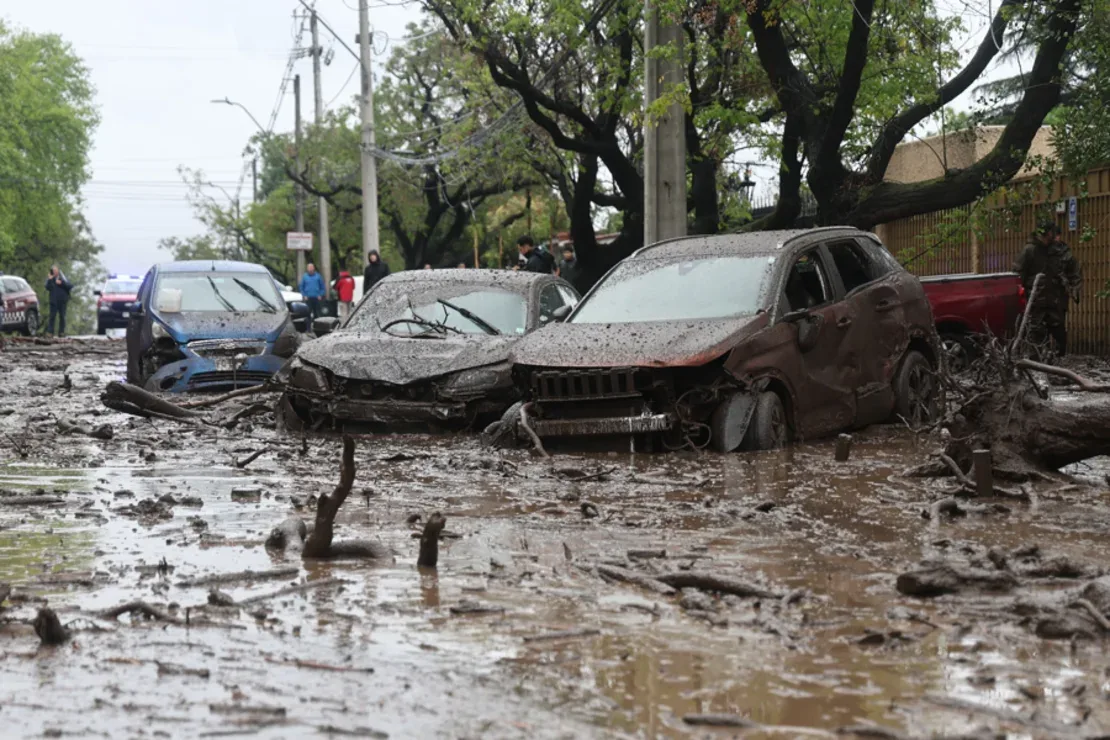
Months later, on October 8, mud once again reached a populated area, this time in San Carlos de Apoquindo, in Las Condes, Santiago. The flow came down Quebrada Honda, swept away vehicles and damaged houses and buildings. The rain fell on land that had been through a wildfire, with loss of vegetation and altered soil.
They are different places, but both cases show why it matters to know your surroundings. A facility can be far from the point where the problem begins and still lie in the path of the water and the material it carries. It can also be cut off if its only access crosses a ravine.
For an organization, being prepared means reviewing that exposure and defining how to protect people when conditions change.
Why mudflows happen
A mudflow occurs when water carries soil, rocks, branches and other material downhill. It often follows a ravine: a natural channel between slopes that may look dry for much of the year.
It can start with very intense rain over a short time or after several days of rainfall. When the ground is saturated, it can absorb less additional water. More of it then runs over the surface and gathers in the channels.
Temperature also plays a role. During storms there is often talk of a high freezing level. This means the level of the atmosphere where it is 0 °C sits higher up. Under those conditions it can rain in mountain areas where, at lower temperatures, it would snow. A larger area then sends water directly into rivers and ravines.
Global warming can favor more intense rainfall and raise the altitude at which snow falls. Scientific evidence projects more frequent and intense heavy precipitation in many regions of the world as temperatures rise. However, each mudflow also depends on the terrain, the vegetation, the material available and the location of homes and roads.
That is why it is not right to automatically attribute every episode to climate change, or to assume that the risk is growing in the same way across Chile. What is right is to review plans in the face of conditions that may change.
What we can learn from Nepal and Spain
In Nepal, the sudden surge of the Budhi Gandaki River on October 11 damaged homes, roads and bridges. Communities near the river were warned and helped to evacuate, while damaged access routes made it harder for aid to arrive. For those who manage a remote facility, the lesson is straightforward: the plan must consider what to do if the usual road becomes unavailable.
In Spain, the rains of October 17 to 19 caused severe flooding in the Mediterranean area. Hundreds of people had to be rescued and temporary travel restrictions were ordered. These cases are a reminder that leaving a building does not always mean being safe: you also need to know the condition of the route and follow the instruction that applies to each place.
A flood and a mudflow are not the same. The first covers a normally dry area with water; the second carries a mixture of water and material. Both require decisions matched to the real danger.
Before the rain: a plan everyone can follow
Preparedness starts with concrete tasks:
Know your surroundings. Check with the municipality or specialists whether there are ravines, slopes or flood-prone areas near the facility and its access routes.
Define how to leave and where to meet. Set routes and meeting points outside threatened areas. Consider alternatives and the needs of people who require help to move.
Assign responsibilities. Decide who checks the alerts, who activates the plan, who guides the evacuation and who confirms that people have arrived. Define backups.
Keep contacts up to date. Include workers, contractors and visitors. In schools, include parents and agree on how information will be given to families.
Prepare the facilities. Check drains and access routes before the rains. Report blockages in channels to the municipality; avoid intervening in them on your own.
Keep supplies on hand. Consider water, flashlights, a radio, a first-aid kit and necessary medication.
Practice. Rehearse the exit, the arrival at the meeting point and the communication. Include night shifts and situations in which a person in charge is absent.
At a mining site, this work must include transport and contractor companies. At a school, it should keep families from coming to pick up students through dangerous access routes. For municipalities and the Fire Service, coordinating contacts and routes helps organize the response.
How to turn an alert into a clear instruction
The team in charge should follow the weather service forecasts and the warnings from Senapred, Chile’s civil protection agency. The plan should state under what conditions activities are suspended, access routes are closed or people are evacuated.
An evacuation order from the authorities must be carried out without waiting for additional internal approval.
Communication needs a known sequence: someone activates the procedure, those in charge of each area pass on the instructions, and those in charge of the meeting points check who has arrived. If someone is missing or needs help, that information must reach the coordinator and the emergency teams.
A useful alert explains what is happening, who must act, what they must do and where to go. For example, a template to be completed with verified information could read:
“Evacuate [sector] due to mudflow risk. Leave by [open route] toward [meeting point]. Do not use [closed access]. Report your arrival or need for help to [person in charge]. Message from [coordination], sent at [time].”
If the route changes, the new instruction must be communicated. There must also be backup channels for people who do not receive the alert on their phone.
During and after: getting out of danger and returning safely
A loud noise coming from a ravine, water that suddenly turns muddier or a sharp change in its level can be signs of danger. If you see an obvious threat, move to a safe place without relying solely on an alert on your phone.
Follow the instructions of the emergency teams. Avoid crossing water or mud on foot or in a vehicle, and do not go near bridges or channels to watch. If someone is trapped, call the Fire Service and avoid putting yourself at risk in an improvised rescue.
When the water goes down, new flows can still occur or there may be damage that is hard to see. Return only when the authorities say it is safe. Before resuming activities, have the affected facilities inspected, especially electricity, gas and water.
Afterwards, review with the team what worked and what needs to be corrected. An outdated contact, a blocked exit or a confusing instruction are problems that must be solved before the next emergency.
How VIPER MASS helps
VIPER MASS is an emergency mass notification system. It sends alerts through the VIPER app, WhatsApp, SMS, voice calls and email to warn many people in seconds, confirm who received the message and coordinate the response.
As part of a plan, it can help communicate an evacuation, report a change in access and pass on new instructions. Confirmation of receipt should be complemented by verifying that people have reached the safe place.
Knowing the territory, practicing the evacuation and having clear communication are tasks that can be prepared starting today. Contact the VIPER team to learn how VIPER MASS can support your organization’s emergency plan.