





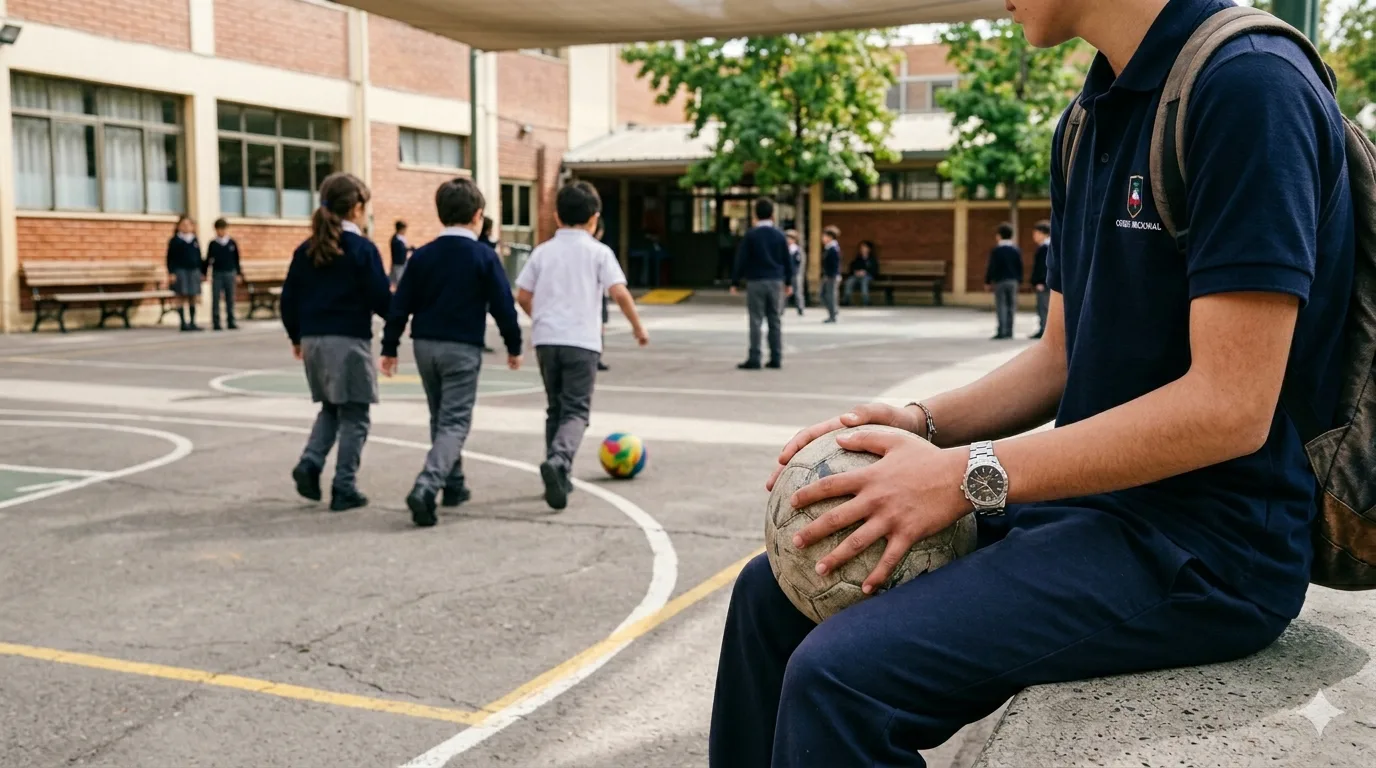
Violence in schools is no longer an isolated problem. Today it is a real, growing and, in some cases, extreme risk. And the biggest weakness is not the lack of protocols, but the inability to execute them when they are needed most. Camilo Salazar / Co-founder VIPER
In recent years, Chile has seen a sustained increase in incidents of violence in educational establishments. Aggressions that escalate in seconds, threats that come through social networks, conflicts that were once exceptional and today are part of everyday life in many schools. The numbers are going in one direction: this is not a streak. It is a structural trend that does not distinguish between type of establishment, region or socioeconomic level.
What was previously considered a problem of coexistence, something that was resolved with mediation, workshops and counselors, today has escalated to a completely different level. We are talking about situations that put the physical integrity of students, teachers and education assistants at risk. And that requires a different response.
The question is no longer whether an incident will occur. The question is: when it happens, how will the school respond?
The real problem: real-time execution
Schools in Chile do have protocols. Many have carefully designed them, shared them with their teams, and filed them in folders that are rarely reopened. The problem is not the intention. The problem is that these protocols are not designed to be executed in real time, under pressure, with incomplete information and in a matter of minutes.
When a critical event occurs, the reality experienced in most establishments is quite different from the written protocol. There are calls that are not enough, WhatsApp messages that are lost in groups with too many people, contradictory information that arrives late and teams that do not know for sure whether they should act or wait for instructions. Managers are often left without visibility of what is happening in their own establishment while the event evolves.
"In events that evolve in minutes, that model fails. And that is the blind spot that no one is solving well." -Camilo Salazar-
The result is predictable: late responses, decisions made with partial information, and a general feeling that the system was not up to par. Not because people did not want to act well, but because they did not have the tools to do so.
The difference between informing and coordinating
Most of the tools that schools use today to communicate, WhatsApp groups, emails, phone calls, are designed to inform. They are channels, not systems. And in a crisis, what is needed is something else: coordinating action in real time, with clear roles, traceability and confirmation that the message reached who it was supposed to reach.
That distinction seems small, but in practice it changes everything. To inform is to tell someone what is happening. Coordinating is making sure that each person knows exactly what to do, when, and that someone verifies that they did it. In a critical event, those seconds and that clarity are what determines whether the protocol works or collapses.
How does the response with a real coordination system
Let's think about any critical situation within an establishment: an attack, a threat, a conflict that escalates quickly. In most schools, the reaction depends on who was nearby, who has the phone handy, and who manages to notify whom. That is, it depends on chance.
Without system
- 1- WhatsApp notifications without order or priority
- 2- Information that is incomplete or arrives late
- 3- Teams that act without coordination
- 4- Nobody knows who already answered
- 5- The manager without visibility in real time
With System
- 1- Protocol activated in seconds
- 2- Simultaneous notification to the entire team
- 3- Specific instructions by role
- 4- Confirmation of who received the alert
- 5- Automatic escalation if someone does not respond
The difference is not technological in the superficial sense. It is operational. Our technology does not replace human judgment or team experience, but it does eliminate improvisation at a time when improvisation is least possible.
Beyond the emergency: specific use cases
Real-time coordination is not only useful for moments of greatest tension. Throughout the school year, establishments face different types of situations that benefit from a structured and rapid response.
01 Violence events
Attacks, threats or fights that require activating protocols in seconds and coordinate the team without improvisation.
02 Operational prevention
Early warnings of threats on social networks or conflicts escalating before they reach the critical point.
03 Communication with representatives
Segmented, timely and consistent messages that avoid rumors and protect the reputation of the establishment.
04 Nets and Holders
Centralized visibility of multiple schools for standardize protocols and react at the corporate level.
The new standard is not just about preventing
Chile advances in physical security measures: greater access control, review of belongings, deterrence infrastructure. They are necessary steps, but insufficient on their own. Detecting a risk is not the same as responding to it. The new standard that schools must meet is not just prevention, but the ability to react correctly when prevention fails.
And that capability is not built with good intentions or well-written protocols. It is built with systems that allow executing, measure and improve response each time they are activated. Systems that provide traceability, that confirm that the information arrived, that automatically escalate when something does not work as expected. Establishments are not failing due to lack of intention. They are failing due to lack of operational tools. And in critical scenarios, this has real consequences for the entire educational community.
Workshops, written protocols and coexistence talks are still important and must continue to exist. But they do not replace the ability to activate, coordinate and measure a response in real time. That capacity is exactly what most schools do not have today, and what makes the difference when it matters most. The Chilean education system needs to take that leap, and those who take it first will be in a very different position when they face the next critical event.