





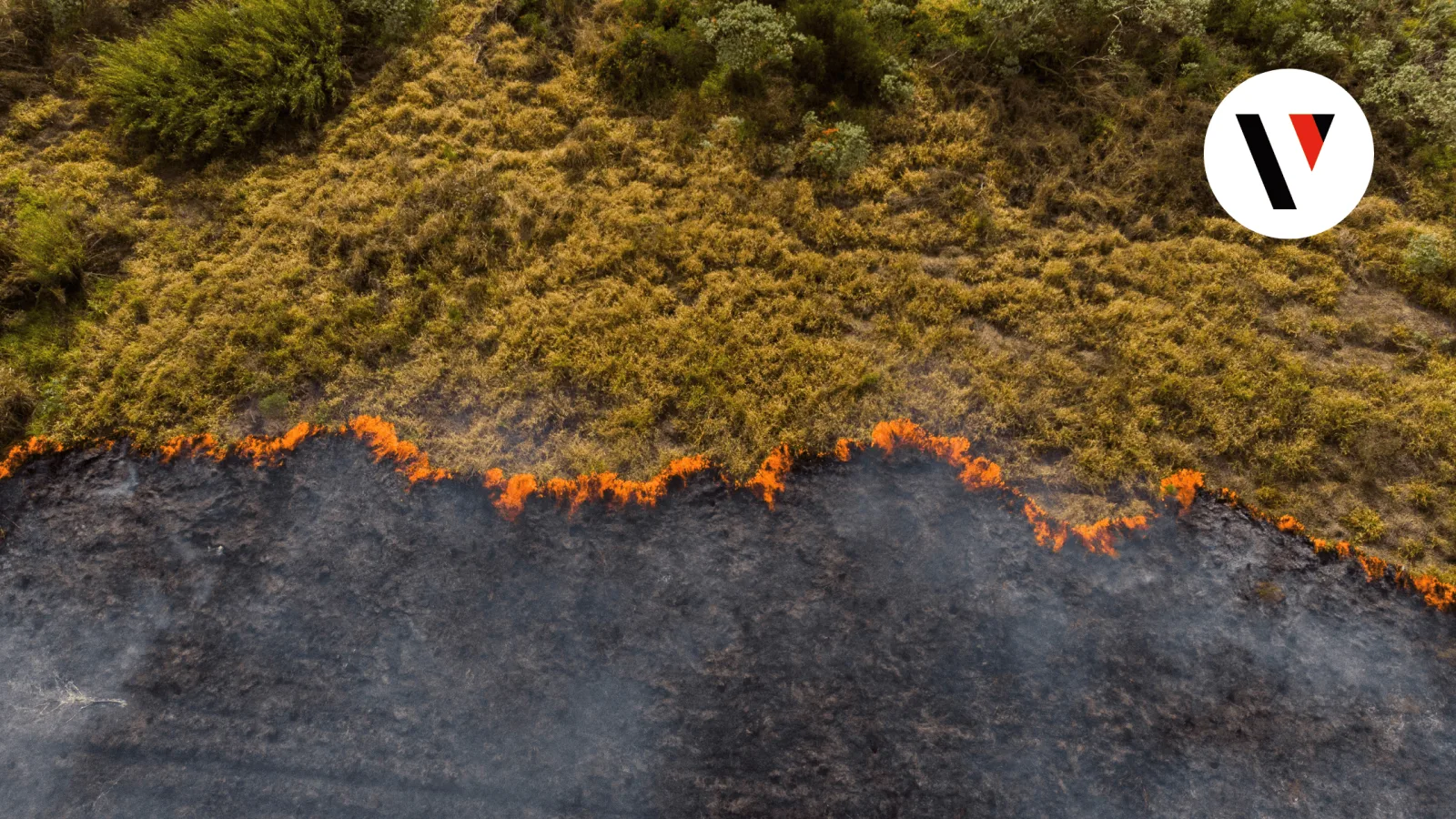
Forest fires not only threaten ecosystems, but also the stability of companies. Learn the keys to anticipating risks, protecting operations and using technology that saves lives.
Chile faces increasingly demanding forest fire seasons, both due to their magnitude and the human, environmental and economic losses they generate. In this scenario, the business preparation becomes a key factor of resilience, business continuity and corporate responsibility.
Climate change and extreme drought conditions have intensified the frequency and scope of these events. At the national level, during the 2024-2025 season, an increase close to 24% in the number of claims compared to the same period of the previous year.
The consequences of these fires are not only reflected in the territory, but also in the country's economy. A study of the Catholic University (Clapes UC) isHe feared that the fires in the Valparaiso Region caused losses greater than US$723 million between homes and critical infrastructure. At the national level, the Treasury calculated that the damage to economic capital derived from the season 2022-2023 They reached close to US$883 million.
These antecedents show that forest fires are not only an environmental or public safety problem, They also put at risk the operational continuity of companies in different sectors and essential services., directly affecting the economy and the well-being of the communities.
Impacts on companies: beyond the fire
Forest fires affect much more than the flora and fauna of the affected sector. Its reach encompasses human lives, infrastructure, corporate reputation and business sustainability.
Human lives:
People's safety must always be the priority. A poorly managed fire can have fatal consequences, so protecting employees and communities is an unavoidable duty of any organization.
Reputation and trust:
Beyond the physical damage, a poorly managed emergency can deteriorate the trust of collaborators, clients and stakeholders. The way a company acts in the face of a crisis defines its credibility and commitment to society.
Critical assets and supply chain:
Fire can destroy machinery, access roads or production facilities, causing interruptions throughout the logistics chain.
Continuity and costs:
Evacuations, power outages or damage to infrastructure compromise business continuity and resilience. Beyond the visible damage, there are recovery costs, compensation and market loss.
In short, Forest fire management and prevention should be considered a business continuity strategy, not just an emergency action.
Prevention and management are our goals
At VIPER we understand that an emergency does not begin when it occurs, but long before. Our comprehensive approach covers the entire cycle, from anticipation to coordinated response and subsequent data that allows you to learn and adapt.
In this sense, institutions such as the National Forestry Corporation (CONAF) have demonstrated a exemplary commitment to modernizing wildfire prevention. His Forest Fire Protection Program (PPCIF) It not only addresses threats and vulnerabilities, but also integrates with advanced technologies.
Your system “Red Button”, anticipates critical areas and significantly improves response capacity. These types of initiatives reflect a strategic and proactive vision, which sets the tone for the rest of the public-private ecosystem in terms of emergency management.
This implies going beyond the reaction, evaluate the environment, train personnel, define escape routes and maintain direct communication with local authorities.
From our experience at VIPER, companies must integrate wildfire prevention into your operational planning.
- Risk mapping:
Identify if the facilities are in forest/infrastructure interface zones, review CONAF risk maps and define critical points such as evacuation routes or water sources. - Emergency and continuity plan:
Incorporate the forest fire scenario into the Emergency Plan. Establish roles, evacuation protocols and clear internal communication systems. In these cases, have VIPER MASS It gives you maximum security and peace of mind for your company. - Monitoring and technological support:
Use systems that integrate environmental and operational data in real time for early warning and decision making. - Drills and continuous improvement:
Carry out evacuation and operational recovery exercises, evaluating results and reinforcing procedures. - External coordination:
Maintain contact with CONAF, firefighters and community authorities, participating in regional drills and reviewing local emergency plans.
The most effective prevention arises when the territorial experience of institutions like CONAF is combined with complementary technologies that strengthen the response.
Platforms like ours should not be seen separately, but as parts of a integrated ecosystem in the face of increasingly complex emergencies.
Facing forest fires requires preparation, coordination and tools that allow us to act quickly and clearly. At VIPER we support companies and institutions to strengthen their emergency management and to reduce the effects of a risk that is part of our reality as a country.