




If you searched for "beeper" and landed here, you're not entirely wrong: the name VIPER evokes the beepers of the 80s and 90s.
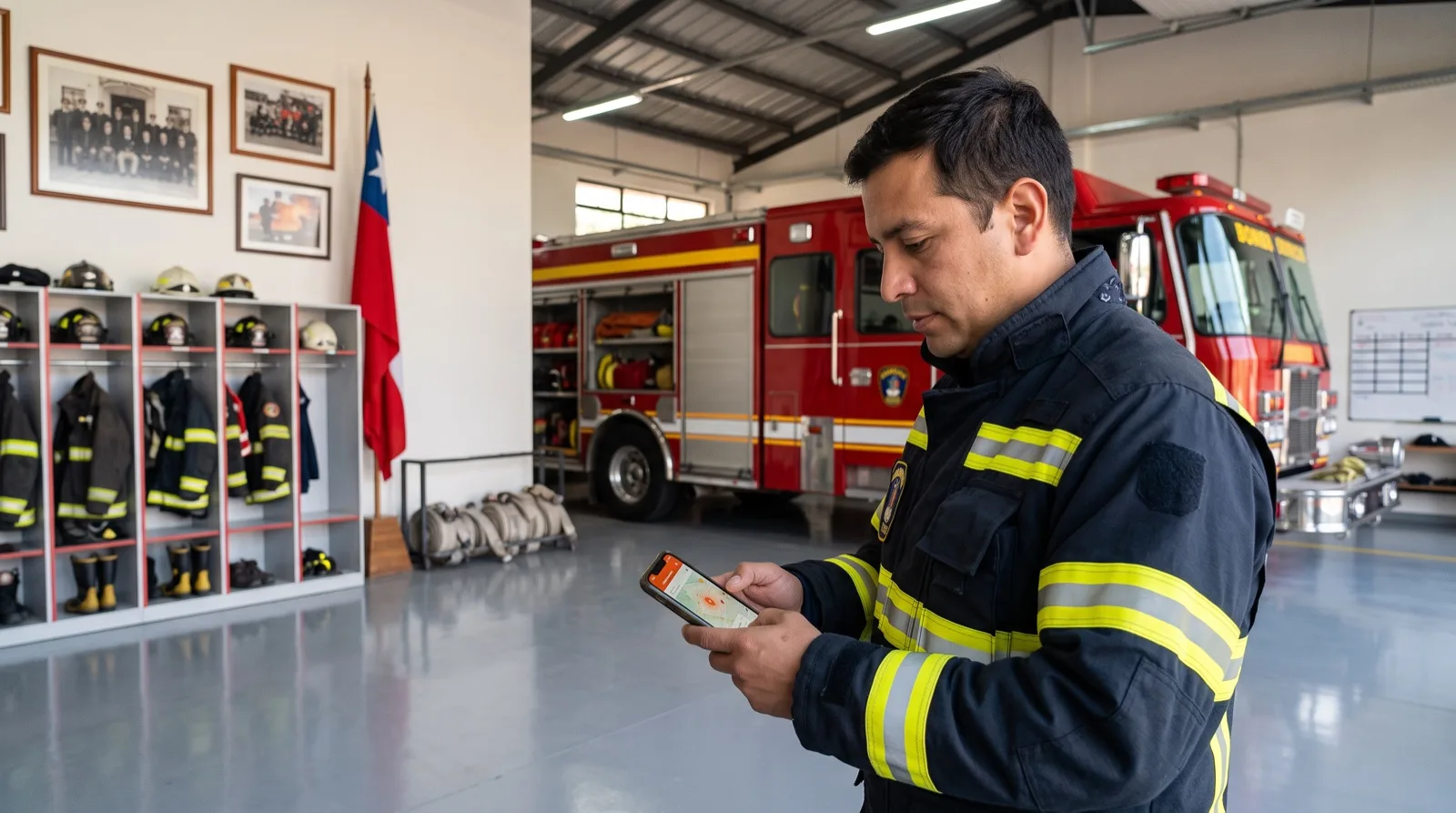
"In the past, they had to be connected to a radio, listen for a siren or be called on the phone to respond. Our software, instead, notified them on their mobile phone with the details of the incident." Camilo Salazar, co-founder of VIPER, in El Mercurio.
For decades the pager was synonymous with alerts, and some fire departments around the world still use it. But it has limits that no adjustment can fix: it only works one way, so dispatch doesn't know who read the alert or how many are heading to the station; it carries little information, just a code and a few words; and it alerts about everything, including emergencies that have nothing to do with the person carrying it.
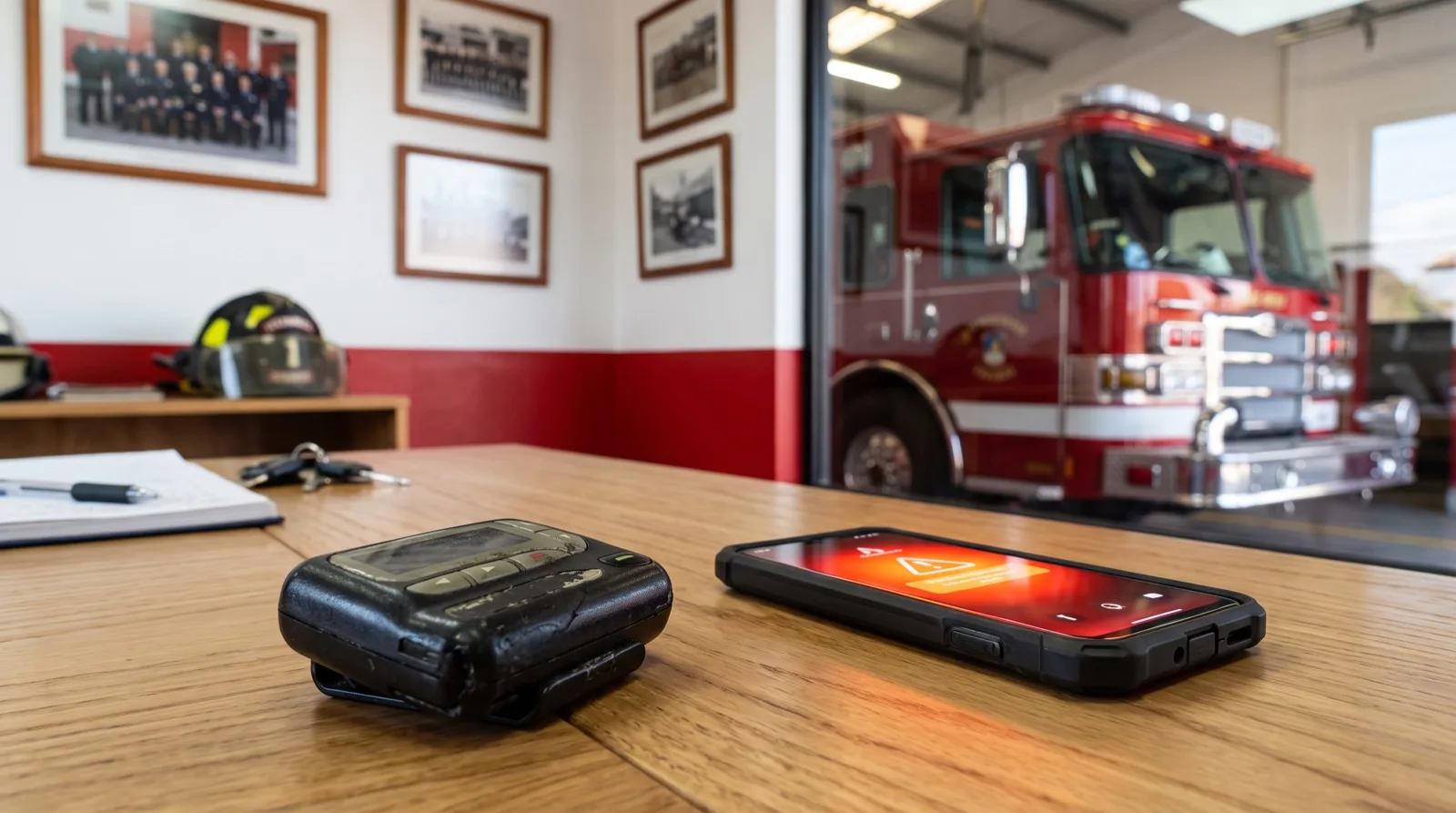
What a phone alert adds
The firefighter alerting apps used around the world agree on the essentials: the firefighter confirms from the alert whether they are responding, and everyone sees in real time who is coming. That matters because the time between the alert and the engine leaving the station is measured: the US standard NFPA 1710 sets 80 seconds for fires. To meet a target like that, dispatch needs to know how many are coming, not just that the alert went out.
In VIPER, each type of emergency has its own tone, and the alert carries the incident details. Antofagasta Fire Department describes it this way:
"Every firefighter gets a notification on their phone with the location and description of the emergency; if it's a fire, it shows the hydrants near the scene."
And at Concepción Fire Department, confirmation changed dispatch:
"Before, dispatch had to wait for the assigned company to confirm whether it had enough crew; if not, another dispatch had to be generated and we had to wait again. With VIPER that information is online: dispatch knows exactly how many firefighters each company has."
Alerts go out by company and by specialty, the route opens in Waze or Google Maps, and on the engine the tablet shows hydrants and the other units on their way.
What if the network fails?
It's the first question any officer asks, and Chile has a good answer. After the 2010 earthquake, the country passed a law to keep telecommunications networks running in emergencies, with critical infrastructure prepared for power outages. The result showed in the magnitude 8.3 Coquimbo earthquake of September 2015: the networks held up, and the authorities gave a positive assessment of how they performed during and after the quake.
On top of that, with VIPER the alert doesn't depend on a single channel. The tone console keeps sounding dispatch over the station radio, and the app adds what the radio lacks: the incident details and confirmation of who is responding. Each department also decides whether the alert sounds even when the phone is on silent or Do Not Disturb.
A good practice for dispatch centers is to also have a backup satellite internet link. That way, even if the center's connection goes down, dispatch keeps working and alerts keep going out.
Today more than 100 fire departments in Chile, covering more than 75% of the population, receive their alerts with VIPER, and dispatches can be made in as little as 40 seconds. Want to see how your companies would be alerted? Book a VIPER CAD demo.